Allen Organ, Model GX-460
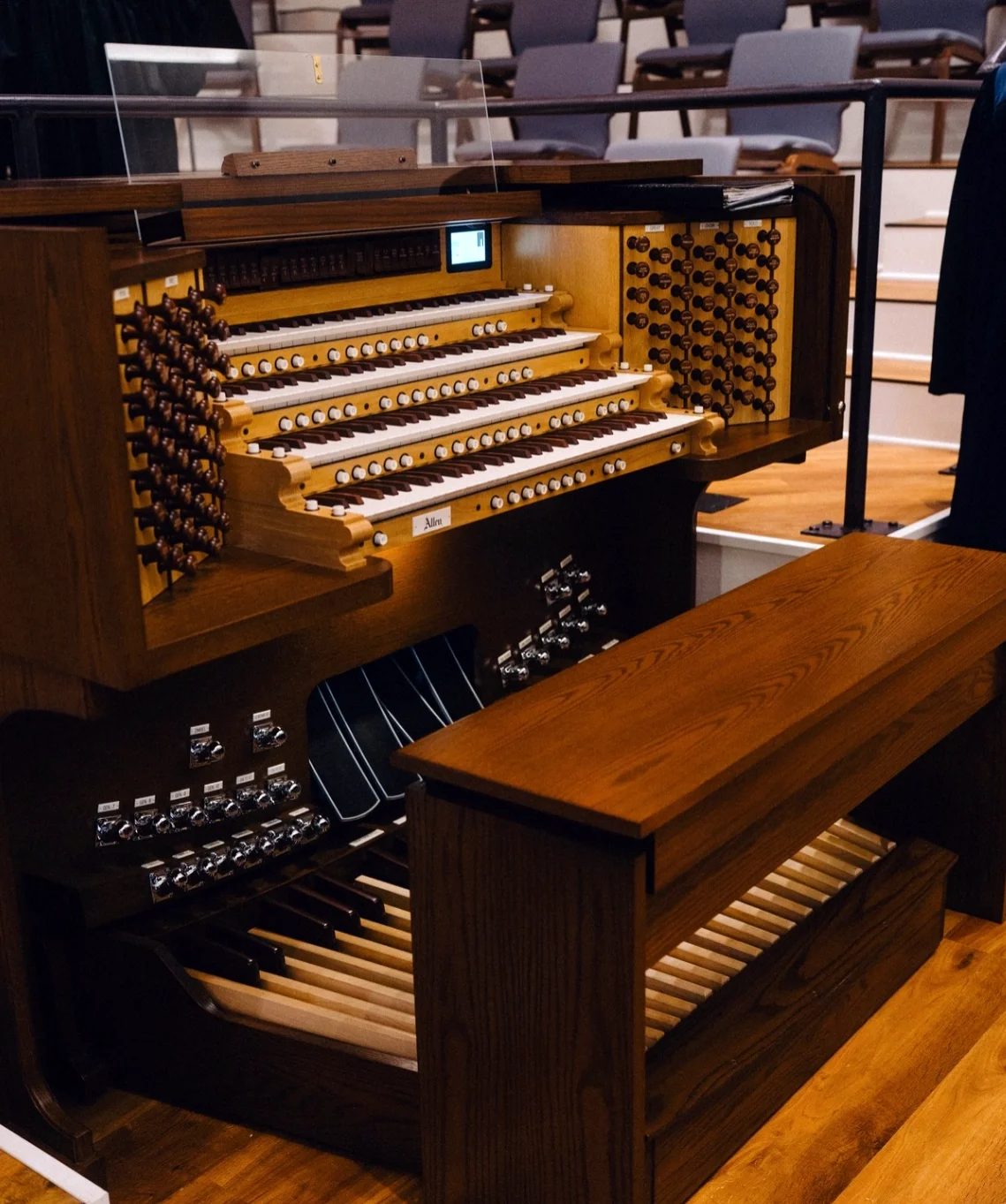
The all-new digital Allen Organ, Model GX-460, is a result of a decade of dreaming, planning, research, coordination, and fundraising.
The instrument represents the latest in digital music technology. The console, the most visible part of the organ, is comprised of a combination of solid light and dark patina wood. The console houses four manuals (keyboards), a concave concert-style pedalboard, stop knobs and toe studs, and controls the four divisions: I. Great and III. Choir, located on the left side of the choir loft, II. Swell, on the right side, and IV. Antiphonal, located underneath the stained-glass window in the new back of the Sanctuary.
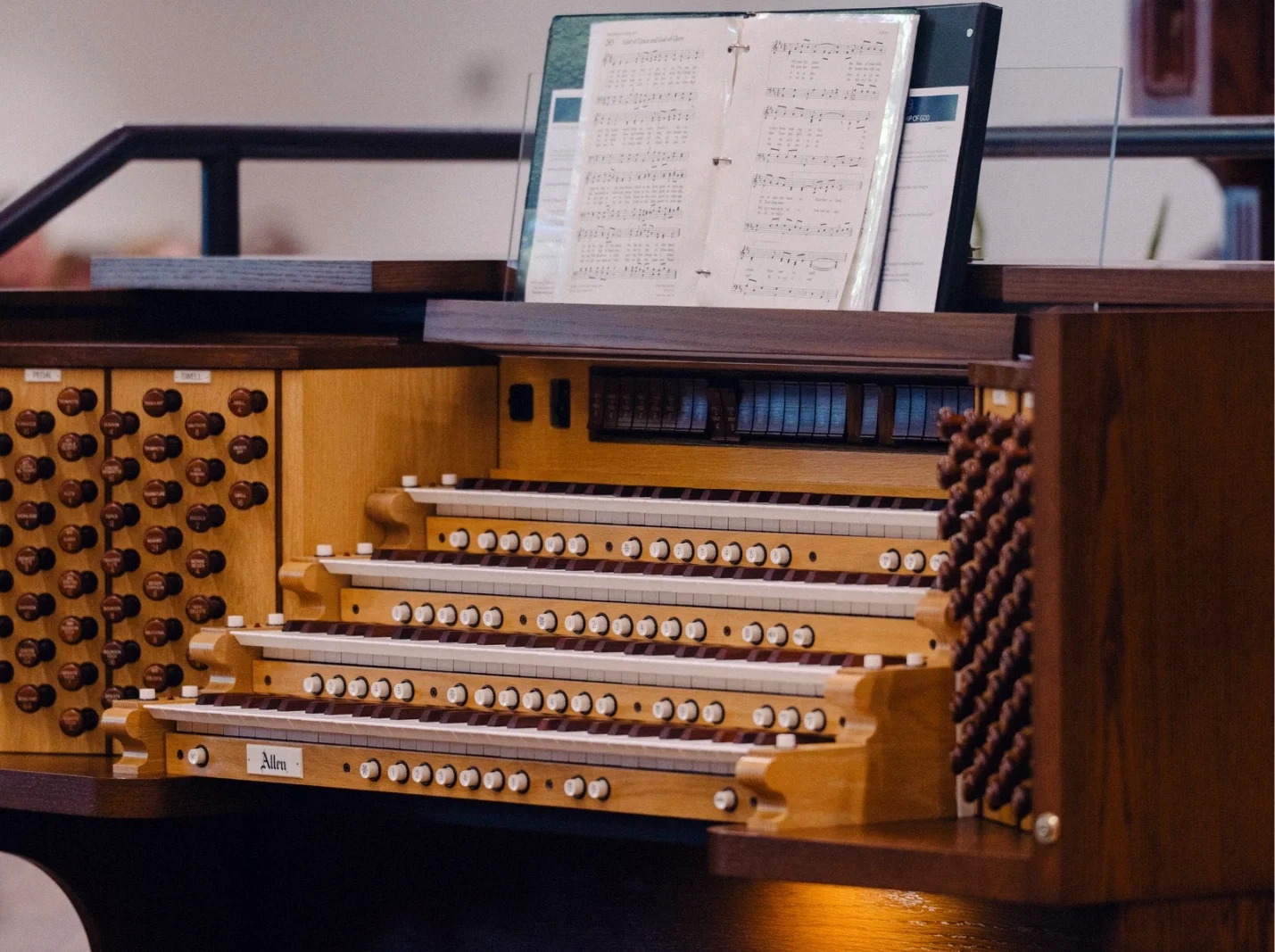

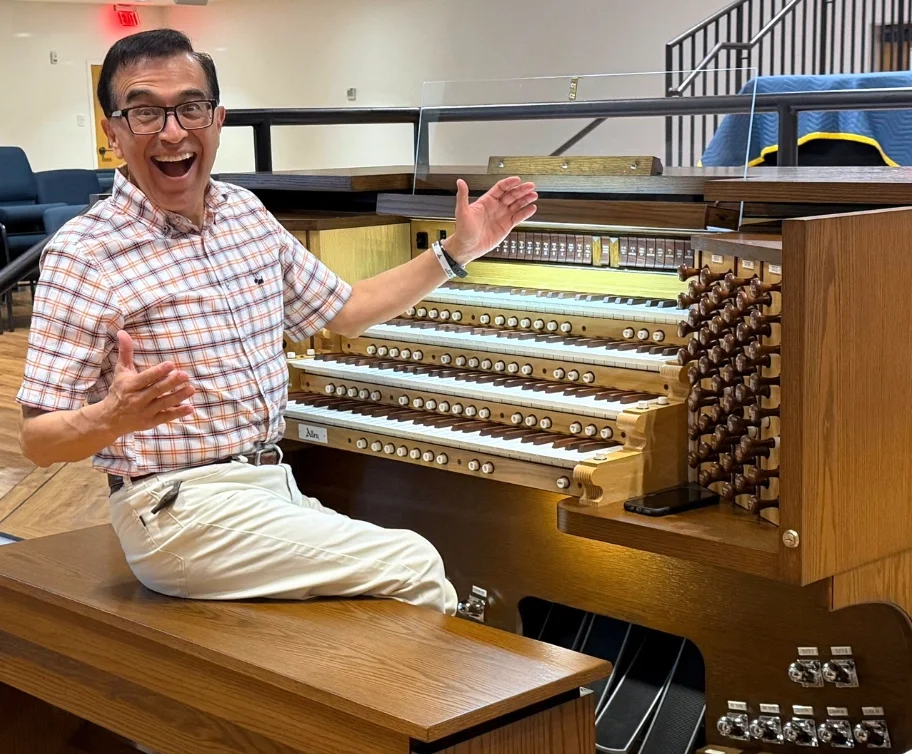
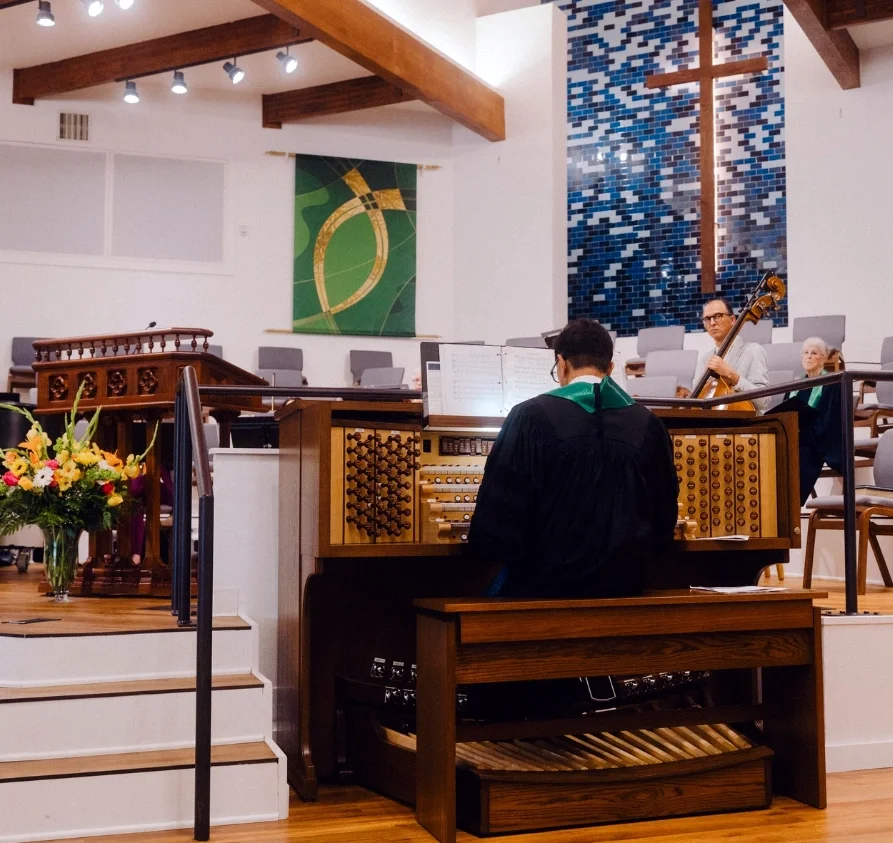
The new instrument replaces the smaller and older Allen model that had served the Woodland community for over three decades. It served Woodland very well for these many years! The purpose replacing the old with the new was motivated by the desire to improve the quality of the tone, to enhancing the way the music floats and fills the Sanctuary. Additionally, thanks to the latest technology, the new instrument includes many new sounds found in large pipe organs and other larger digital instruments.
The former instrument was given by Joyce and Luke Williams in loving memory of their beloved daughter, Lydia Williams Allen. Lydia was a strong, caring, compassionate, and loving soul who lived life on the cutting edge and changed the world for the better in astonishing ways. May her memory continue to live powerfully among us as we embark upon a new day of worship, mission, ministry, singing, and Christ-like compassion on Huebner Road.
It is the prayer, hope, and desire of the Worship and Music ministry, that this instrument shall provide appropriate support for congregational and choral singing, as well as a tool for meditation, introspection, and inspiration for anyone attending a service, a concert, or a recital at Woodland.
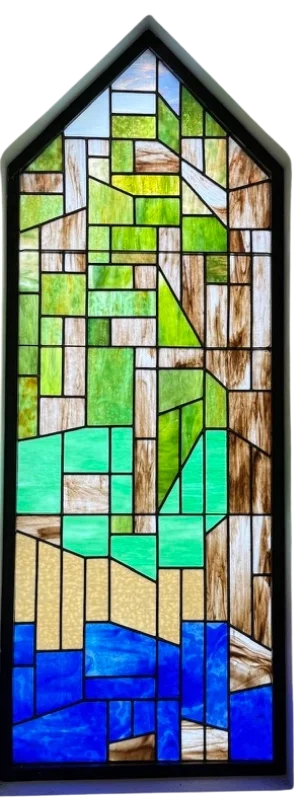
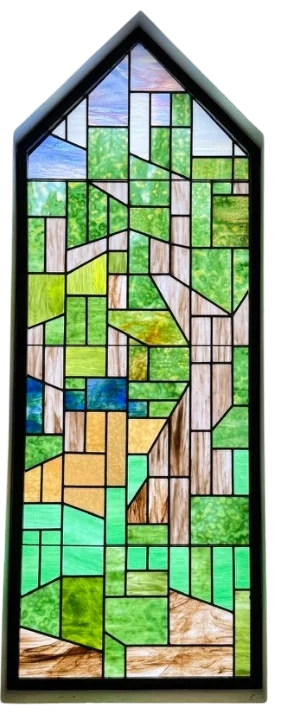
The window draws its inspiration from the vision of St. John in Book of Revelation 22:2. At first glance, the imagery can feel mysterious—even puzzling. One scholar has described the verse as “awkward,” asking: how can a single tree stand on both sides of a river?
Rather than a problem to solve, this may be an invitation to wonder. The image suggests a deep, living interconnectedness. Like an aspen grove—where what appears to be many trees is in fact one organism joined by an unseen network of roots—the Tree of Life stretches beyond what we can easily comprehend. Its roots run beneath and through the river, binding what seems separate into a single, shared life.
In this vision, the world is not divided but held together. The Tree of Life nourishes all, offering healing and wholeness for the nations, and reminding us that beneath the surface, we belong to one another.
The light comes through the leaves of the trees, and the leaves are meant for healing. As the light comes through this window, we are reminded of our call to care for the earth and to be God’s agents of healing, even the healing of the nations.

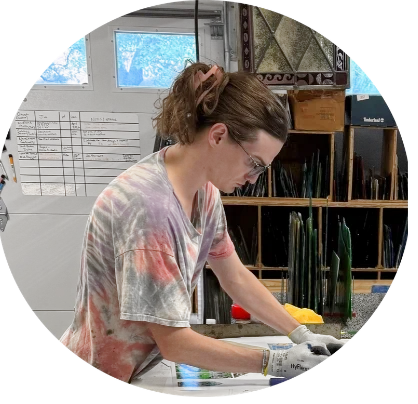
Grojean Glass Studio began in Dallas in 2012, when Michele Grojean Blaker switched careers after 20 years in communications, following the 2009 death of her father, who had run his own stained glass business in San Antonio and taught her the craft. In 2021, Michele moved to San Antonio — the city her father had called home — and now runs the studio's office there. Her son Barrett spent his high school years helping her with installs, repairs, and restorations. He went on to earn a master's degree in architecture, and brings that training into his work today as he runs the Dallas location of Grojean Glass. An artist in his own right, he designed the Woodland window.
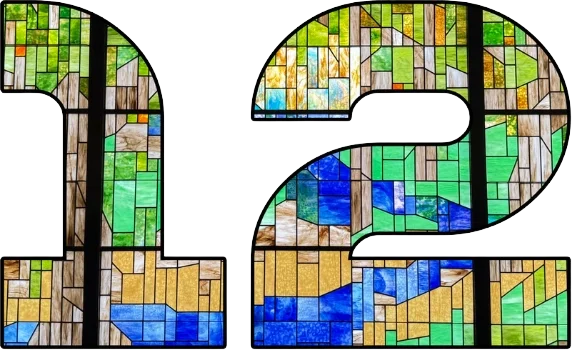
Fun fact: The river of life is flowing from 12 unique pieces of gold/amber glass (in reference to the throne) and we repeated other items of 12: 12 fruits, 12 trees, and in the original design, there are 1212 pieces of glass across the three windows.
The Artists

Michele Blaker
“When designing glass art—whether interpreting a biblical verse or a defined concept—the approach can be literal, depicting the subject as realistically as possible, or more figurative and abstract. This second approach seemed appropriate for this passage from Revelation, especially since the verse allows room for interpretation. Certainly, the Tree of Life could be rendered as a single tree, and many artists have taken that route. But we wanted a piece that reflected the real space and community of Woodland, as well as the passage itself—one that invited the viewer to lean into the mystery of both the art and the scripture.”
Barrett Blaker